
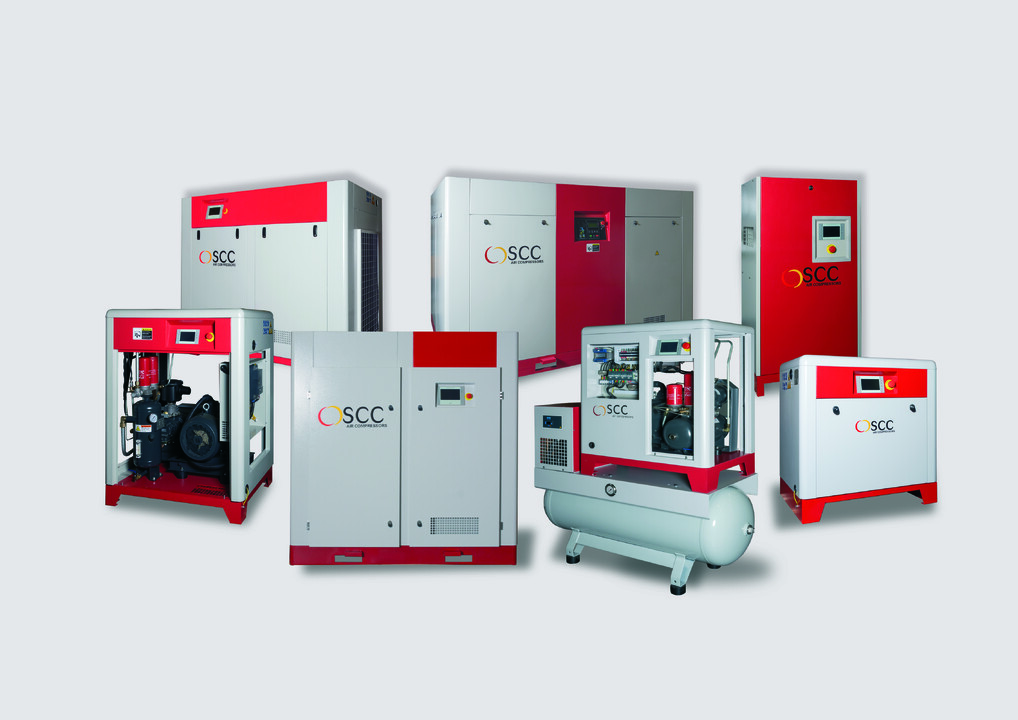

An air compressor is a machine that collects air in a closed space (usually a tank), thereby increasing the pressure inside it. In industry, compressed air is an integral part of the facility, as it is required for multiple applications throughout the entire production and processing line.
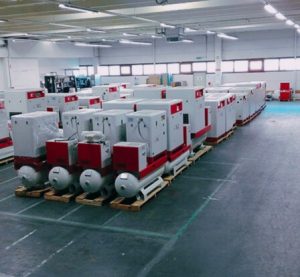
There are several different methods used to compress air. The most common types of air compressors are piston compressors, rotary compressors, screw compressors, and vane compressors. In industry, piston compressors (for lower air flow rates and lighter-duty applications) and screw compressors (for higher air flow rates and heavier-duty applications) are primarily used.
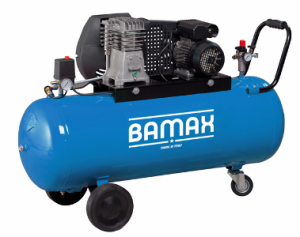
Piston compressors compress air using pistons that move within cylinders, generating the desired air pressure. These air compressors are older technology, are quite small in size, and have low efficiency. They are usually wheeled so they can be moved to wherever compressed air is needed. They are durable enough for use in harsh environmental conditions but produce a fair amount of noise and are often enclosed in a soundproof box. Continuous use is not recommended due to the risk of overheating.
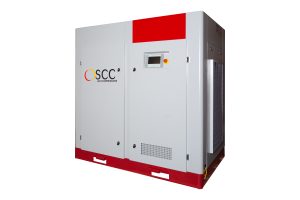
Screw compressors produce compressed air using two intermeshing screws that rotate without coming into contact with each other. It is this lack of material contact that makes this type of air compressor highly reliable and durable. Screw compressors are capable of producing very large volumes of compressed air and can operate continuously for long periods of time. They are usually connected to the factory’s central network or used to power large machines; they are fairly quiet and highly efficient.
The following can be cited as specific types of the above air compressors:
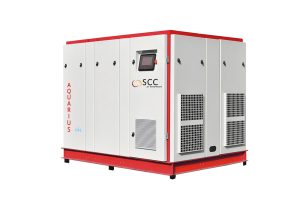
· Oil-free air compressors, for applications requiring clean air free of oil (food processing plants, hospitals, etc.).
· Variable-speed (inverter) air compressors, which produce a constant volume of air by continuously adjusting speed to precisely match consumption needs. Additionally, by adjusting the speed, they maintain a constant system pressure, resulting in significant energy savings.
The air compressor is typically equipped with inlet and outlet filters and a dryer to ensure the proper quality of the compressed air, regardless of environmental conditions. The pressure of the compressed air produced ranges from 5 to 13 bar.
Main functions of an air compressor
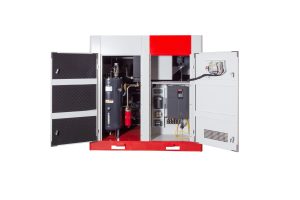
Air enters the machine from the outside through the intake valve and flows into the compression chamber (pistons or screws, depending on the type of air compressor). Along with the air, oil enters the chamber, which lubricates and protects the friction surfaces, as well as acting as a sealant to ensure proper air compression. As they move continuously, the air is trapped and compressed to the desired pressure. The air-oil mixture is then directed to the oil separator, where the oil is separated from the air, cooled, and returned to the compression chamber for the same process. The now-clean air is directed to a special sealed air reservoir, where it remains at a constant pressure until it is used.
Utility of an air compressor
Air compressors are used by everyone from small repair shops to large manufacturing plants. They are found in nearly every sector of industry, such as food processing, packaging, the pharmaceutical industry, etc., as compressed air is versatile and very useful for fine movements requiring low pressure (usually 4–10 bar) and high precision. Compressed air also enables high speeds, which is extremely useful in automation. Furthermore, they are essential in the shipping industry. Air compressors are installed on ships, where high-pressure compressed air is required to start their engines, as well as for many other applications.
Contact our air compressor specialists that will help you decide on the best compressor option based on your needs!
